

If you’re deciding to take the leap and start up a new business, you probably have a lot of questions and your mind will be racing with ideas. It can be both an extremely exciting time and also rather daunting – especially if you’re throwing yourself into it full time and funding the venture from your savings as such.
One of the best things you can do, regardless as to whether you’re a start up or an established business is arm yourself with as much information as possible. I’m not just talking about knowledge or your niche, sector, product or service. I mean in terms of business in general. Creating a successful start up is hard enough, you need to give yourself the best chance of success and the right knowledge can go a long way to achieving that.
Obviously the Internet has a wealth of information with regards to start ups and business in general but one blog I’ve been reading a lot recently is Trevor McClintock’s blog at trevormcclintockblog.com – if you’re serious about planning a startup, you’ll do well to have a read through it. It covers a wide array of subjects which you may not have come across before and as I’ve mentioned before, arming yourself with knowledge is the key to success.
Your Brand
The brand is usually the second thing you think of after you’ve decided on the sector you want to operate in and the product or service you want to provide.
You need something memorable, something that sounds professional, and something that passes the radio test (you don’t want to lose word-of-mouth customers). A domain name is a great first step, and using a .co domain can be a great way to access a wider variety of names, while still being catchy and retaining global reach.
If you can achieve all of these things you’ll be well on your way to achieving the perfect brand name.
Examples of memorable brand names include the following:
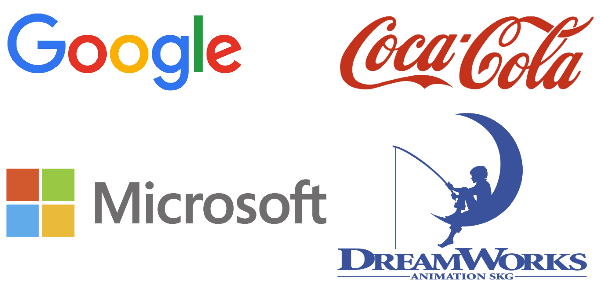
As seen above, the other part of your brand will come from your logo, colour scheme and font hierarchy.
What that will be will obviously differ on a case by case basis but if you stick to simplistic styles and don’t overdo the colour you’ll be fine.
Company Formation or Self Employment
In the UK, your two primary choices when it comes to running your business is going self-employed or forming a private, limited liability company. There are obviously pros and cons with each but it’s really going to depend on your personal situation.
Obviously the limited liability company is less risk on the face of it but you may end up paying more taxes and find it more difficult to get credit (should you need it) than you would if you were doing it under your own name as self employed.
Doing It Better (or a unique idea)
There are typically two choices when it comes to any start up. You can either bring something completely unique to the market or you can take an idea that exists already, improve it or put your own spin on it. All start ups do not need to be unique and in fact some of the biggest companies out there are all heavily influenced by a product or service which is already in the market. You will be hard pushed to think of a major company who were truly first to the market.
Running Costs – Limit Them!
One of the biggest reasons for failure with new start ups are the running costs. Lots of people try and run before they can walk. They invest in offices, staff, equipment etc and before they know it all of the initial start up capital has been exhausted and the business isn’t turning over enough to make ends meet month to month. It is at this point a lot of companies call it a day and fold.
The key is to do as much of the work as you can yourself, even if it means your growth will be somewhat slower. As your client or customer base grows, you should grow your infrastructure to accommodate. Going all in day one is a recipe for disaster.
Set Customers to Work!
With the advent of social media in particular for online businesses it’s important to put your customers to work. By that I mean in essence to try and turn one customer into two.
Make it as easy as possible for them to share your offerings, refer people or simply let people know in the real world about your company. A single, initial customer is the hardest to get, you need to make each of them work for you in such a way to maximise your outreach.
Relationships Are Important
They say it’s not what you know, it’s who you know and this couldn’t be more true in the world of business. Relationships are what will make or break your business whether it’s with your customers directly, potential partners or even your suppliers. Do not think you know better than anyone else and do not think that they need you more than you need them. You must treat every person you deal with from the ground up as if they’re your best friend. You never know what the future holds and when you might need them.
Final Thoughts
Hopefully this run through has given you something to think about. There are lots of great start up blogs out there if you’d like to read more, here is a great one that covers all of the usual subjects and issues that are likely to arise during your endeavors but really there is no substitute for just diving right in and effectively learning on the job. Most of the successful people you meet in business will have their own stories and experiences in terms of failure. The key is to learn from it and progress.